type of work on SEO-optimization of a furniture online store from the agency "Site Ok"
Expanded polystyrene is a heat-insulating material with a low coefficient of thermal conductivity. This insulation allows you to keep warm inside heated rooms in winter, in the summer, conversely, hot air remains from the outside and does not penetrate the house.
Advantages of polystyrene foam
Polistyle foam has many advantages, relevant at insulation of the house:
- Environmental Safety.
- Durability.
- Resistance to aggressive media.
- fire safety.
- moisture resistance. M
- Soundproofing and windproof functions.
- Universality and simplicity of installation.
- The ability to maintain size and not to shrink.
- Small weight.
- Low price.
Having insulated your walls outside, you get warmth inside and coziness and in the kitchen you will drink tea not in order to keep warm, And to have fun, in full comfort.
Varieties of polystyrene foam
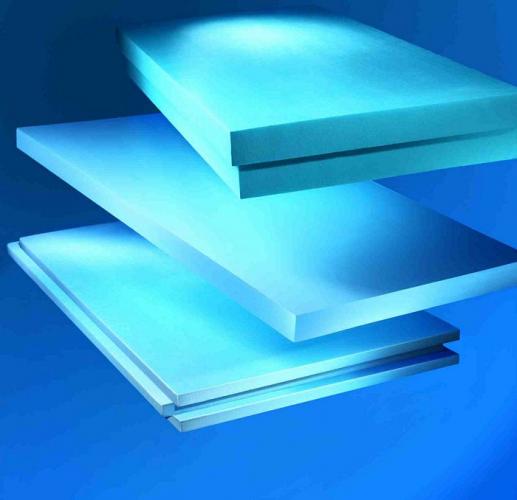
PSB C - Polistyle Polistyle Suspensional unsuccessful self -adjacent. The industry produces several varieties of polystyrene foam, the difference of which is the density, thickness, strength and other characteristics.
1. PSB S-15 with density 15 kg/m3. It is used to warm up everyday life, wagons, containers, in food packaging.
- Properties:
- The strength of the strength during bending is more 0,07 MPA;
- Thermal conductivity is more 0,042 W/(md ° C);
- ability to water absorption for 24 less than an hour 3% From volume.
2. PSB S-25 with density 25 kg/m3. This material is widely used in the insulation of facades of houses, roofs, basements, as well as in the production of SIP panels as an intermediate thermal insulation layer.
- Properties:
- The strength of the strength when compressing from above 0,1 MPA;
- The strength of the strength during bending over 0,18 MPA;
- Thermal conductivity is lower 0,039 W/(md ° C);
- ability to water absorption for 24 less than an hour 2% From volume.
3. PSB S-35 with density 35 kg/m3. This brand participates in the release of multi -layer panels, in the device of heated paths, car parking lots, sports grounds, in thermal insulation of pipes and underground utilities.
- Properties:
- The strength of the strength when compressing from above 0,16 MPA;
- The strength of the strength during bending over 0,25 MPA;
- Thermal conductivity is lower 0,037 W/(md ° C);
- ability to water absorption for 24 less than an hour 2% From volume.
4. PSB S-50 with density 50 kg/m3. With the help of polystyrene polystyrene, multi -storey refrigerators are made, carry out reconstruction of roads in swampy territories, They insulate heavy vehicles parking.
- Properties:
- The strength of the strength when compressing from above 0,2 MPA;
- The strength of the strength during bending over 0,35 MPA;
- Thermal conductivity is lower 0,04 W/(md ° C);
- ability to water absorption for 24 less than an hour 1,8 % From volume.
Ways of insulation
There are two ways Warming with polystyrene: Outside and inside.
- In the external way, private houses and cottages are insulated, as well as multi -storey buildings during the integrated decoration and reconstruction of facades. In this case, the foam is mounted on the outer part of the facade, as a result of which the desired effect is achieved, Without influencing the internal space of the premises.
- The internal method is used in that case, when there is no way to perform external insulation, namely in individual apartments of apartment buildings. Foam is attached on the walls in the room itself. In this case, the space inside decreases by the thickness of the insulation, and there is also a risk of producing foam fluid products in the case of a fire hazardous situation.
Approximate cost of insulation by polystyrene foam
The price of extruded polystyrene foam ranges, Depending on the brand and thickness. On average, it is 200-300 hryvnias for 1m3. If we take the most common PSB S-25 with thickness for insulation of facades. 20 mm, then the cost of the coating of 1 m2 wall will be the order 250 UAH. Find out the exact cost and order insulation in Poltava you can: +38 (096) 523 53 31.
Is the insulation harmful to health foam
Foam or polystyrene foam is considered absolutely harmless to human health. In a calm state, he does not secrete any chemicals, No wonder it is widely used as a package for food products. It can be a threat to respiration organs only if you melt and smell in case of fire, if it is not outside, And inside the room.
Fire safety of polystyrene foam
In case of fire hazardous situation, the polystyrene is not capable of combustion. He is supplied, After which the flame is self -adjusted. In this way, insulation can become an obstacle to the spread of fire.
Materials (edit), necessary for insulation by polystyrene foam
In addition to the foam heat insulator itself, during insulation work, you need to:
- primer;
- plaster fiberglass mesh;
- Special glue;
- Dry plastering mixture;
- Starting profile;
- The corners are reinforced;
- special dowels of several types.
Stages of insulation of the facade by polystyrene foam
Performing insulation with foam independently, the next sequence of actions should be followed.
- Preparation of the surface of the walls. This includes cleaning from dirt, fungus, mold, sealing cracks and cracks, alignment. Then primer is carried out by a solution of deep penetration.

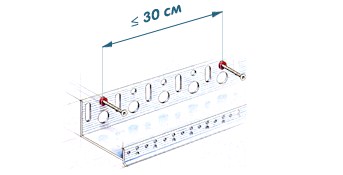
- Installation of starting profiles. They are necessary to prevent sliding of the polystyrene foam sheets during their installation. Profiles are fixed with dowels or self -tapping screws, Depending on the material of the walls.
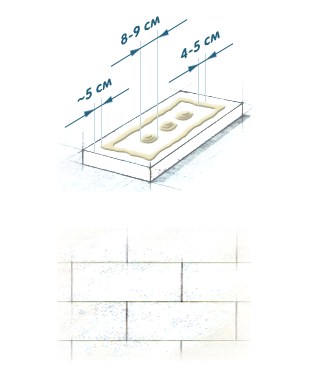
- Streaming of foam. We recommend a dot border method of gluing. In this case, the adhesive is applied without tears in the form of separate beacons, to the installation sites of dowels.
- Additional foam consolidation with dowels. This operation must be performed after about three days (The term depends on the adhesive, If you use glue for foam master thermol, then you can produce dowels after a day) After gluing, so that the glue base is completely dried up. Sheets of foam with special dowels with wide hats are fixed in the corners and in the center.

- Grunning and plastering. The reinforcing composition is applied, and then a layer of plaster, diluted in the right proportion with water. Further, a wet -fiberglass reinforcing mesh is recessed on the wet, wet..
- Installation of reinforced corners. They are attached at the corners of the building, to make more even and neat (First, corners are placed, Then the reinforcing mesh).
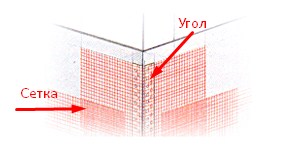
- Applying reinforcing composition and re -plastering. Applying the finish decorative protective layer. This is the application of decorative plaster, staining, gluing clinker tiles and other options.
The resulting design is resistant to mechanical influences, natural factors, allows you to give the building an original look, and most importantly - effective and durable, will delight the owners of the house for a long time, and others.


0 Comments